
What Public Health Can Learn From AI in Journalism
This article first appeared over at This Week in Public Health Artificial intelligence is rapidly changing journalism. Newsrooms are using AI to summarize information, generate drafts, analyze large datasets, translate stories, optimize content for search, and help distribute information to audiences. Public health is beginning to use many of the same technologies. But a new…
How Effective Evaluation Can Transform Social Services
In today’s fast-paced world, social service programs are constantly evolving to meet the changing needs of communities. But how do we know if these programs are effective? How can we ensure that social services are truly making a difference? The answer lies in evaluation—specifically, how we use evaluation to improve outcomes. A recent scoping review…
Good Governance in Not-for-Profit Organizations: A Closer Look at Board Effectiveness
Good governance is a crucial aspect of any organization, but it’s particularly significant for not-for-profit (NFP) organizations. These entities often rely on their Boards of Directors to ensure effective governance, which in turn impacts their reputation, integrity, and overall efficiency. The article Good Governance in Not-for-Profit Organizations: A Review of the Literature on Boards of…
Building Stronger Communities Through Sports
Imagine a place where people facing life’s toughest challenges can find support, friendship, and a path to better health—all through the power of sports. Community sports programs offer just that, helping adults in socially vulnerable positions improve their lives. Let’s explore how these programs are evaluated and implemented, and why they are so vital for…
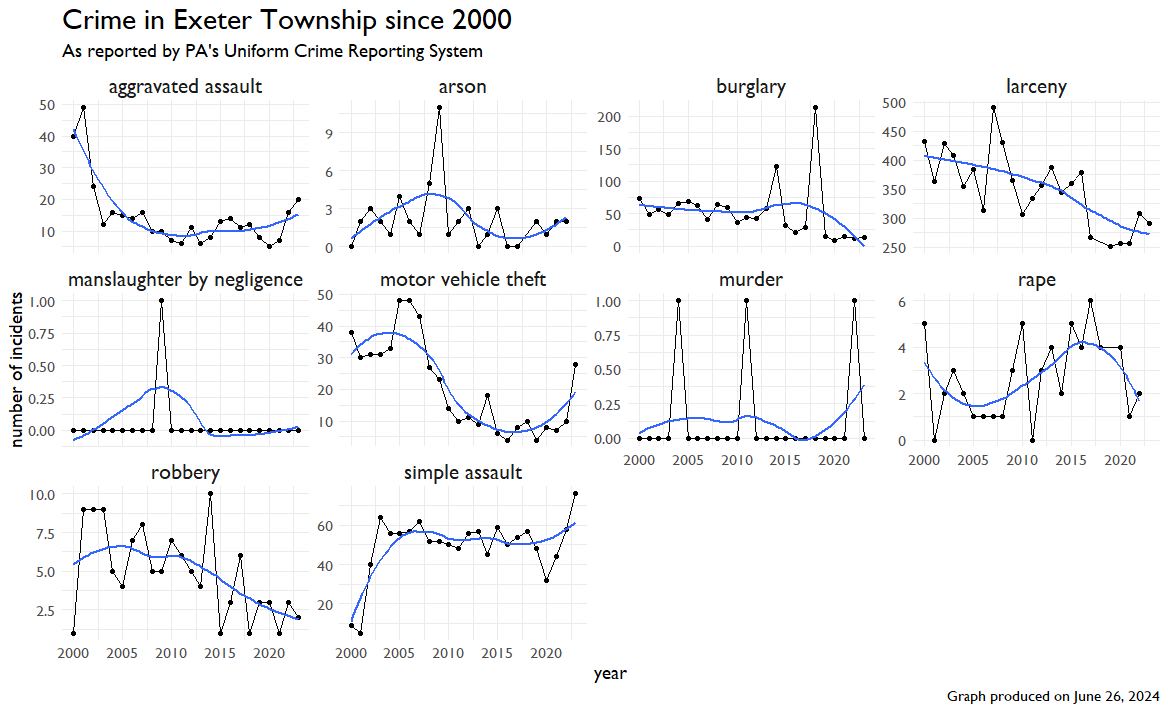
Don’t Cut and Paste Numbers: The Story of the Exeter Police Annual Reports
Far be it from me to throw the first stone. I can get sloppy sometimes, so I’ve learned to make sure someone who is NOT ME checks my work before it goes out. When I skip that step, which sometimes I do out of urgency, I inevitably find some incredibly stupid error I should have…
Embracing Cultural Competence in Program Evaluation: A Closer Look at Why It Matters
In the realm of public health, understanding and implementing culturally competent practices within program evaluations is not just beneficial—it’s essential. The article “Through a Culturally Competent Lens: Why the Program Evaluation Standards Matter” by Sarah Gill, Robin Kuwahara, and Maureen Wilce, featured in the Health Promotion Practice journal, delves deep into this topic, showcasing the…
What are our local graduates doing?
As some people know, I’m a failed school board candidate. Despite that, I have a keen interest in the development of the youth in our community. We community psychologists have to pay attention to our own backyards, after all. In order to explore more fully what Exeter High School graduates are doing, I systematically went…
How to Build a Logic Model: A Brief Oveview
In today’s fast-paced world, where data-informed decisions are paramount, understanding and creating logic models can be a game-changer. A logic model, in its simplest form, is a roadmap or a blueprint that visually represents the relationship between the resources you have, the activities you plan, and the changes or results you hope to achieve. It’s…
Qualitative Comparative Analysis as an Evaluation Tool: Unraveling Lessons from Development Cooperation
In recent years, the methodology known as Qualitative Comparative Analysis (QCA) has emerged as a potent tool in evaluation, particularly within the domain of development cooperation. The study Qualitative Comparative Analysis as an Evaluation Tool: Lessons From an Application in Development Cooperation sheds light on its application, revealing both its potential and challenges in the…
Logic Models in Evaluation: Insights from the Research
In the world of program evaluation, logic models are like road maps. They guide us through the complex journey of understanding how programs are supposed to work. Just like a well-drawn map makes a journey smoother, a well-designed logic model clarifies understanding of a program’s goals, activities, and expected outcomes. This is crucial in many…
Program Evaluation: The Roadmap to Efficiency and Effectiveness
Imagine you’ve just baked a cake for the first time. You followed the recipe, watched the oven, and carefully decorated it. But the real test isn’t in how it looks; it’s in how it tastes and whether it brings the joy you intended. Program evaluation is quite similar. It’s the process of systematically collecting and…
The Cost of Funding: Analyzing the Burden of Proposal Writing in Energy Research
In his article, “Can’t We Do Better? A cost-benefit analysis of proposal writing in a competitive funding environment,” Gerald Schweiger delves into the world of third-party funding in Austria’s energy research sector. Through a detailed survey, Schweiger uncovers the extensive time and effort invested in proposal writing and questions the efficiency of the current competitive…