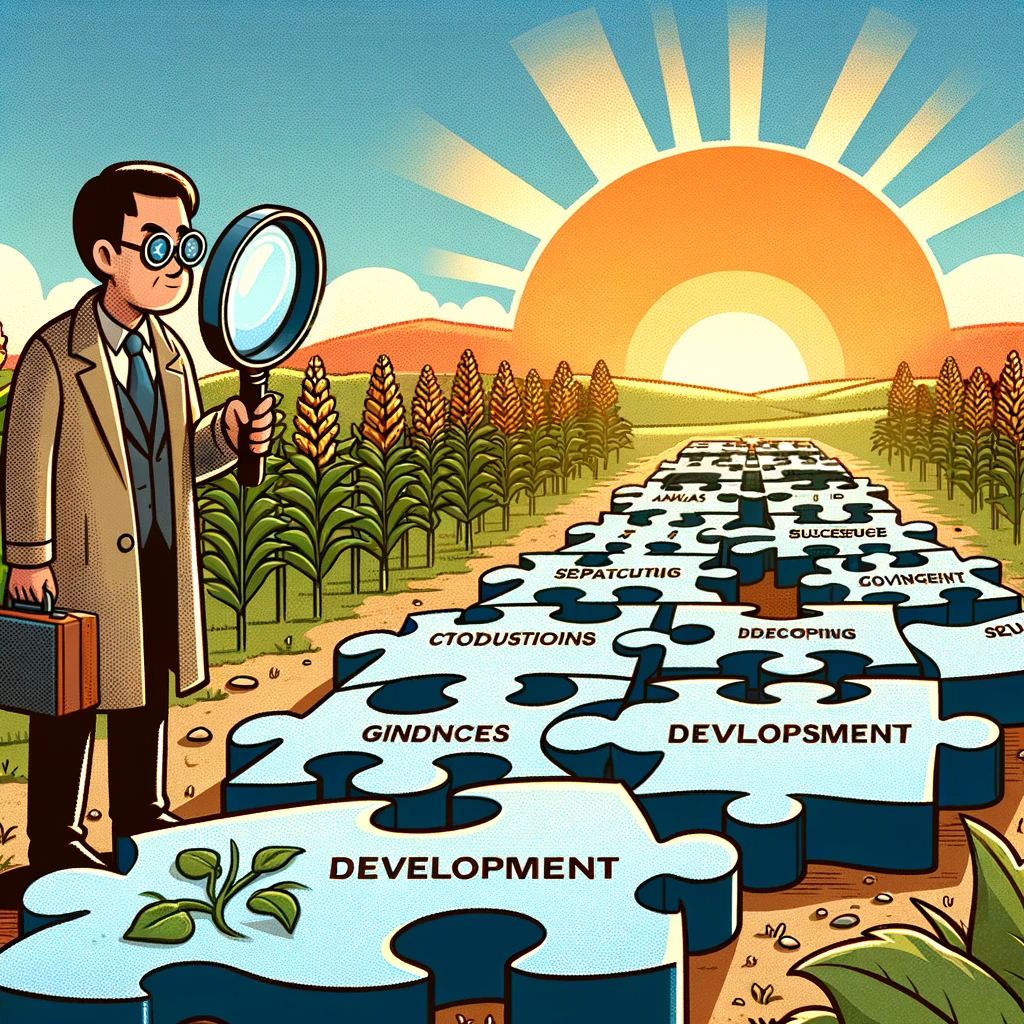

Qualitative Comparative Analysis as an Evaluation Tool: Unraveling Lessons from Development Cooperation
In recent years, the methodology known as Qualitative Comparative Analysis (QCA) has emerged as a potent tool in evaluation, particularly within the domain of development cooperation. The study Qualitative Comparative Analysis as an Evaluation Tool: Lessons From an Application in Development Cooperation sheds light on its application, revealing both its potential and challenges in the…
Exploring the Power of Formative Evaluation in Clinical Implementation: Simplifying Science for Better Healthcare
In the complex world of healthcare, ensuring that new strategies and treatments are effectively implemented can be quite a challenge. The article “Using formative evaluation methods to improve clinical implementation efforts: Description and an example,” published in the renowned journal ScienceDirect, dives deep into this challenge, focusing on formative evaluation as a key tool. This…
Unlocking Insights with Regression Discontinuity: A Simple Guide
Have you ever wondered how researchers decide if a new program is effective? How do they know if the program is causing the improvement and not something else? This is where a clever statistical tool called “regression discontinuity design” (RDD) comes into play. It’s a bit like detective work in the research world, and it’s…
Notes on “Notes on Effective Altruism”
I first came across the effective on Lex Fridman’s podcast where he interviewed William MacAskill. In a nutshell, effective altruism is the practice of making decisions based on the greatest good for the greatest number of people. This can be done by donating money to charity, volunteering your time, or advocating for change. Effective altruism…
Analyzing Twitter Data: There’s an App for that.
Well, we finally did it. We launched a beta version of Readiness Learning Systems. So far, we only have two apps up there, which are designed to help you analyze and learn from Twitter data. What you can do is either enter a hashtag or a full account (like @waitbutwhy, for example), and we’ll process…
Implementation Matters: A website to document community-based practices, knowledge, and evidence.
We just launched Implementation Matters–our 100% open-source, community-driven wiki to collect and store community-based evidence and perspectives on community-based issues. This is why we’re doing it. Vanishing Ideas Over the past decade, I’ve worked with dozens and dozens of amazing coalitions and organizations. And the work that they do sometimes gets documented into evaluation reports…
Readiness, outcomes, and roles.
Thanks to the vision and constant grinding of Dr. Janet Durbin of CAMH, we have empirical support that readiness differs depending on the role and level of leadership in an organization. That’s it. No need to bury the lede! Okay, here’s a bit more For a while, we had some challenges with readiness research. Recall…
Using news as an evalution source
For our work in CDC-RISE, we are using all sorts of unobtrusive measures and data sources to understand conditions in the communities we are working with. This post over at our sister site, PubTrawlr, talks about how we looked at Health Equity stories in Missouri. Check it all out below.
The Purpose of a Community Assessment Tool: How We Use it In Various Projects
Community capacity building is hard. That is no secret. Oftentimes, community teams have a challenge just identifying both the strengths and their areas for growth. This is where a set of transformation tools come in. Over the previous 8 years, we’ve worked with a network of committed community change agents known as WE in the…