
Understanding De-implementation in Healthcare and Public Health
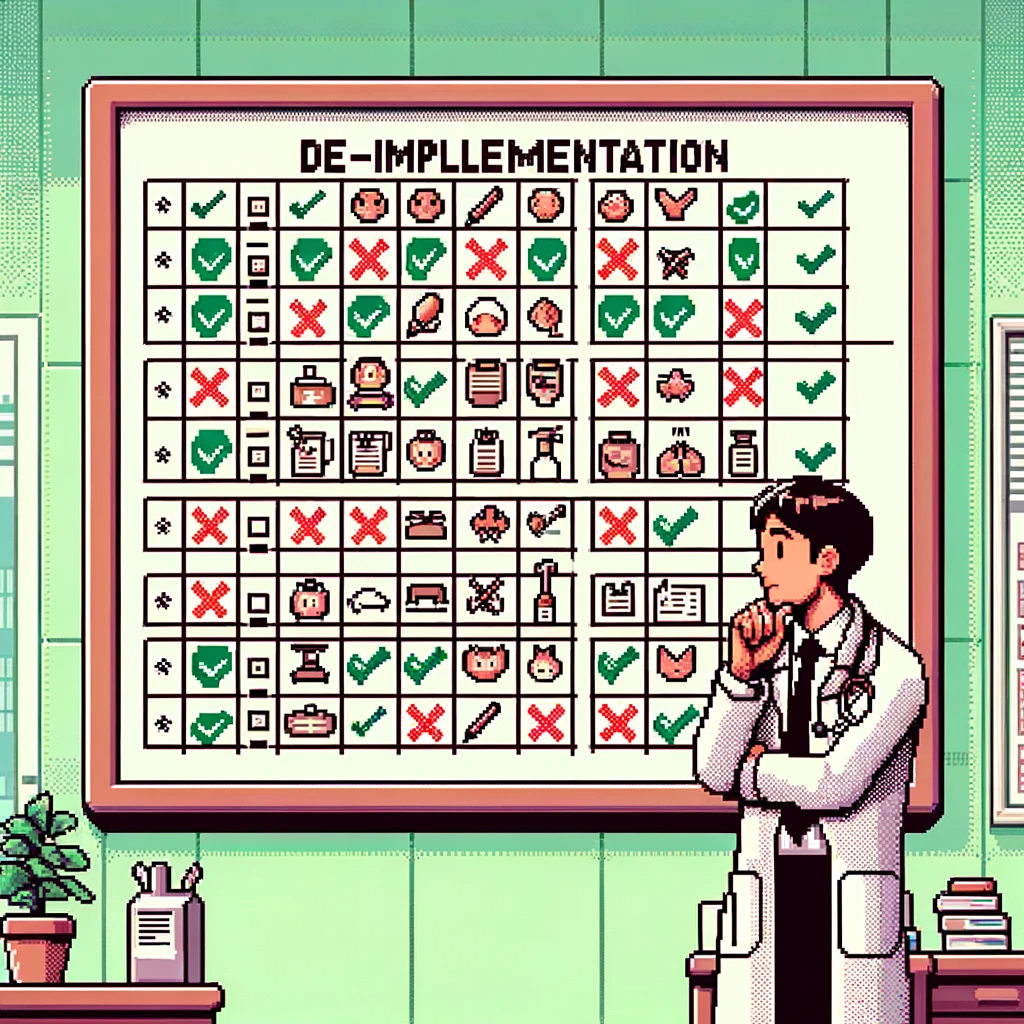
In the ever-evolving world of healthcare and public health, the term ‘de-implementation’ is gaining prominence. This concept, essentially the process of phasing out ineffective or harmful practices, is crucial for enhancing the efficiency and effectiveness of healthcare services. The article, A Scoping Review of De-implementation Frameworks and Models by Callie Walsh-Bailey et al., published in…
Community Health Worker Salaries in the US
For one of our projects, I was doing research on community health workers. I pulled this data from the Bureau of Labor Statistics. What I find super notable about this is that this data DOES NOT align with other evaluation data we are gathering around salaries. Our data suggests the amounts are MUCH lower. I…
The Practical Application of Quality Implementation Tool (QIT) in Real-World Settings
Let’s travel back in time, nearly a decade. I was a young, totally naive graduate student. An older student, Duncan Meyers asked that I help out with developing an article about providing practical guidance for implementation. Sounded…..interesting? I didn’t know it at the time, but that article opened up a world to me about effectively…
The Power of Implementation Frameworks: Insights from the Breathewell Study
In healthcare, implementing new interventions successfully is a complex puzzle. The article Planning for Implementation Success Using RE-AIM and CFIR Frameworks: A Qualitative Study published in Frontiers in Public Health unravels this complexity. This blog aims to demystify the findings of this study, shedding light on how frameworks like RE-AIM and CFIR can guide the…
Quantitative Evaluation in Implementation Research: A Guide to Enhancing Healthcare Delivery
In the rapidly evolving world of healthcare, understanding and implementing effective strategies is crucial for improving patient outcomes and healthcare systems. A fascinating article, “Quantitative approaches for the evaluation of implementation research studies,” published in ScienceDirect, provides invaluable insights into this area. This blog aims to demystify the complex concepts presented in the article, breaking…
Unlocking Insights with Regression Discontinuity: A Simple Guide
Have you ever wondered how researchers decide if a new program is effective? How do they know if the program is causing the improvement and not something else? This is where a clever statistical tool called “regression discontinuity design” (RDD) comes into play. It’s a bit like detective work in the research world, and it’s…
Qualitative Comparative Analysis vs. Coincidence Analysis
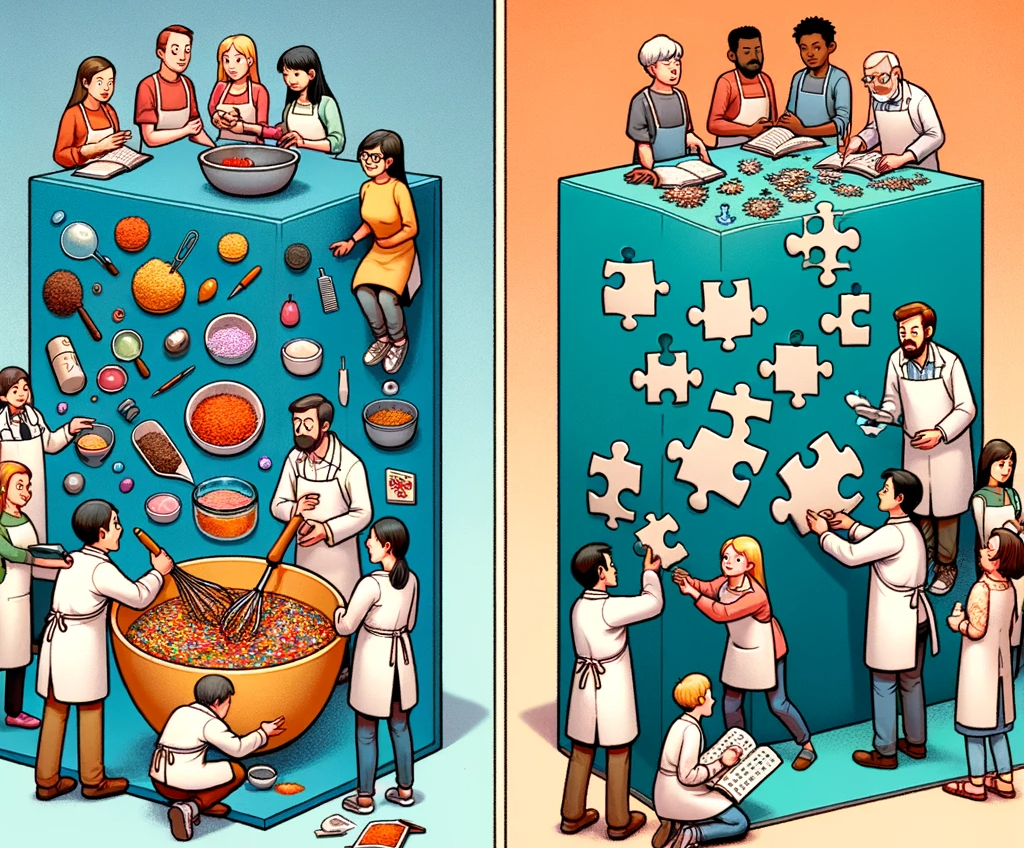
Today, we’re exploring two intriguing approaches: Qualitative Comparative Analysis (QCA) and Coincidence Analysis (CNA). Whether you’re a student, researcher, or just a curious mind, this blog will enlighten you in simple, easy-to-understand language. What is Qualitative Comparative Analysis (QCA)? Imagine you’re baking a cake. You know that certain ingredients are crucial, but the recipe isn’t…
The Complexities of Fidelity in Behavioral Interventions
In the realm of healthcare and behavioral interventions, fidelity is a crucial concept, yet one that is often underexplored and underreported. Fidelity refers to the degree to which an intervention is implemented as intended. It’s a measure of quality and accuracy in executing a program or study, and it’s especially vital in complex, group-level interventions.…
Unraveling ARIMA: The Statistical Key to Predicting the Future
Have you ever wondered how experts predict everything from stock market trends to next year’s fashion? One secret lies in a statistical superhero named ARIMA. This method may sound like a complex puzzle, but it’s a powerful tool that’s more accessible than you think, even if you’re stepping out of high school. What is ARIMA?…
Understanding Technical Assistance: A Comprehensive Review of Its Evaluation and Effectiveness
Introduction Technical Assistance (TA) is a critical strategy used worldwide in various sectors, from public health to education. Its primary goal is to support the implementation and sustainability of evidence-based practices (EBPs), which can be a challenging task. This blog post examines a study that takes a closer look at TA—its evaluation, effectiveness, and how…
Unlocking the Mystery of Autocorrelation: A Key to Understanding Patterns in Community Research
Have you ever noticed how certain events or behaviors seem to follow a pattern over time? For instance, a community health worker may observe that flu cases rise and fall similarly each year. This isn’t a coincidence; it’s a statistical phenomenon known as autocorrelation, and it’s more common than you might think. What is Autocorrelation?…
Understanding Interrupted Time Series Designs: A Simple Guide
Have you ever wondered how experts determine the impact of an event or a new policy on society? Whether it’s introducing a new traffic law or a community health initiative, researchers have a toolkit for unraveling the effects of such interventions. One such tool is the “interrupted time series design.” This powerful research method helps…