
Boost Your Organization with Ongoing Readiness Development

Boost your organization’s resilience with continuous readiness development and discover effective strategies for sustainable success. Our latest blog explains how to maintain your organization’s readiness to remain prepared and adaptable for any situation.
Everyday Implementation
Just a mini-post to say that there’s going to be some very exciting news soon about the 2024 Global Implementation Conference. So watch this space!
Rethinking Evaluation Practice in Public Health 3.0: The Role of Implementation Science
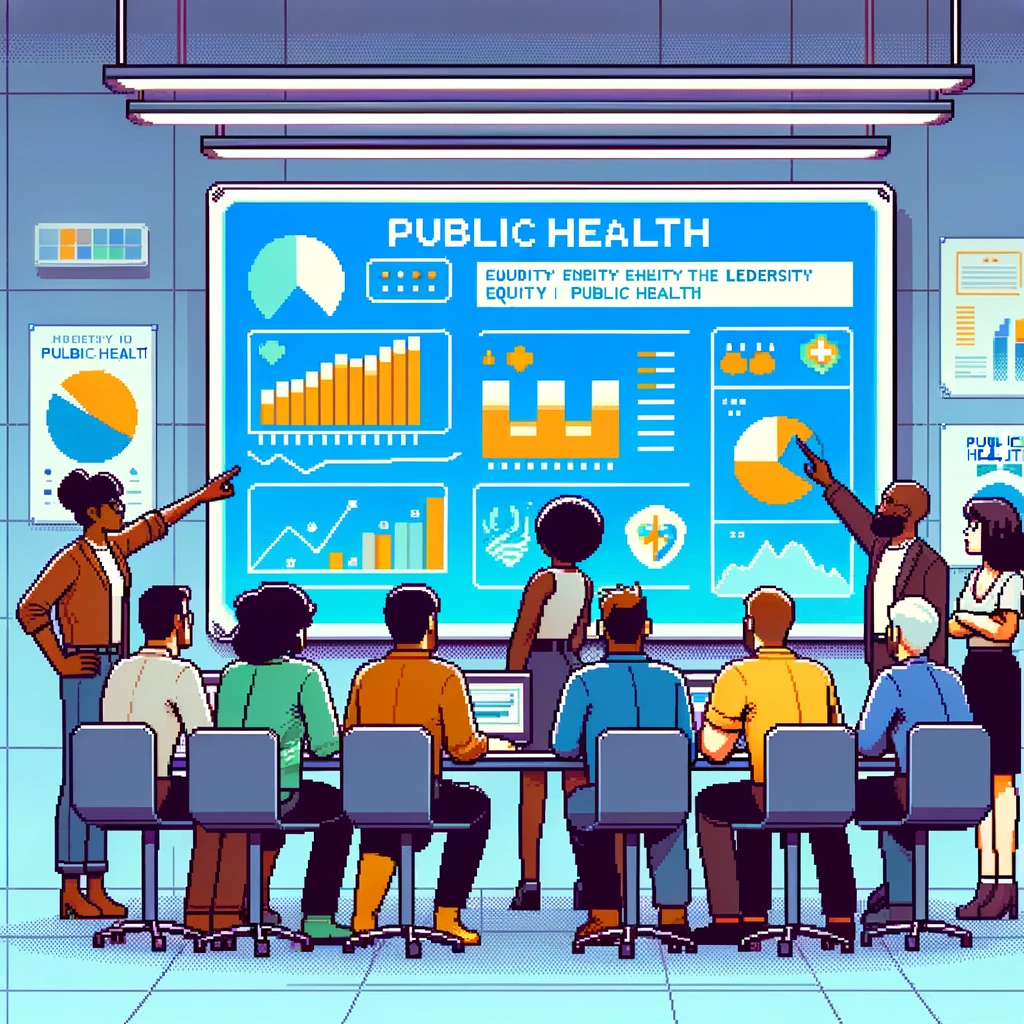
Public health is in a dynamic transformation, with the advancement of Public Health 3.0 reshaping how health strategies are developed and implemented. A pivotal aspect of this transformation, highlighted in the article Building capacity for Public Health 3.0: introducing implementation science into an MPH curriculum is the integration of implementation science into public health education.…
The Power of Data in Public Health: A Dive into “Data for Equity”
Public health relies heavily on data, the science and art of preventing disease, prolonging life, and promoting health. But what happens when this data, crucial for making informed decisions, is tinted with biases? This is where the article, “Data for Equity: Creating an Antiracist, Intersectional Approach to Data in a Local Health Department,” comes into…
Navigating the Challenges of Affordable Housing: Insights from “Affordable Housing and NIMBYism”
Affordable housing is a critical issue in urban, suburban, and rural communities. The article “Affordable Housing and NIMBYism: Urban, Suburban and Rural Strategies” offers a comprehensive look into the challenges and strategies surrounding affordable housing developments. This blog aims to demystify the article’s content for a high school-level audience, focusing on its implications for evaluation…
Understanding RE-AIM: A Guide to Effective Health InterventionsIn the world of health promotion and disease management, the Reach, Effectiveness, Adoption, Implementation, and Maintenance (RE-AIM) framework has emerged as a pivotal tool for evaluating and planning health interventions. This framework, first introduced in 1999, offers a comprehensive approach to assessing health programs in real-world settings, going beyond traditional research methods. It focuses on…
A Deep Dive into the 2009’s”A theory of organizational readiness for change”
Change is a constant in any organization, but how do organizations effectively adapt to it? This is the question addressed in the 2009 article A theory of organizational readiness for change by Brian Weiner. This article provides a comprehensive framework for understanding how organizations prepare for and implement change, especially in healthcare settings. Let’s break…
Adapting to Change: The Future of Public Health Evaluation
In the dynamic world of public health, staying one step ahead is crucial. The article “On-the-Go Adaptation of Implementation Approaches and Strategies in Health: Emerging Perspectives and Research Opportunities” (Annual Reviews) highlights a groundbreaking approach that could revolutionize how we evaluate public health practices. This approach, known as ‘adaptive implementation,’ is about flexibility and responsiveness.…
Understanding Little’s Test of Missing Completely at Random
Data analysts and statisticians often face the challenge of missing data in their datasets. It’s crucial to understand the nature of this missing data to ensure the accuracy and integrity of any analysis. This is where Little’s Test of Missing Completely at Random (MCAR) plays a vital role. What Does MCAR Mean? MCAR stands for…
Understanding the “State of Open Data 2023”
The State of Open Data 2023 report, a comprehensive survey by Springer Nature, is a landmark publication in understanding open data’s progress. Over eight years, open data has evolved from an academic concept to a widely accepted practice, often mandated for researchers and institutions. This report, viewed as a long-term resource, chronicles the development of…
The Power of Qualitative Methods in Healthcare Implementation Research
In the world of healthcare research, numbers often take the center stage. However, a recent article in ScienceDirect, titled “Qualitative methods in implementation research: An introduction,” sheds light on the often-underrated qualitative methods that play a crucial role in understanding the nuances of healthcare implementation. What are Qualitative Methods? Qualitative research is like a detailed…
Harnessing the Power of Retrieval-Augmented Generation (RAG) for Enhancing AI-Based Applications
The evolution of Large Language Models (LLMs) like GPT-3.5 and beyond has revolutionized how we interact with AI. But there’s a catch: despite their vast knowledge, these models often lack the latest or proprietary data that businesses need. Traditionally, fine-tuning was the go-to method for updating these models, but as they grow in size and…